AI shifts from advisor to decision-maker
/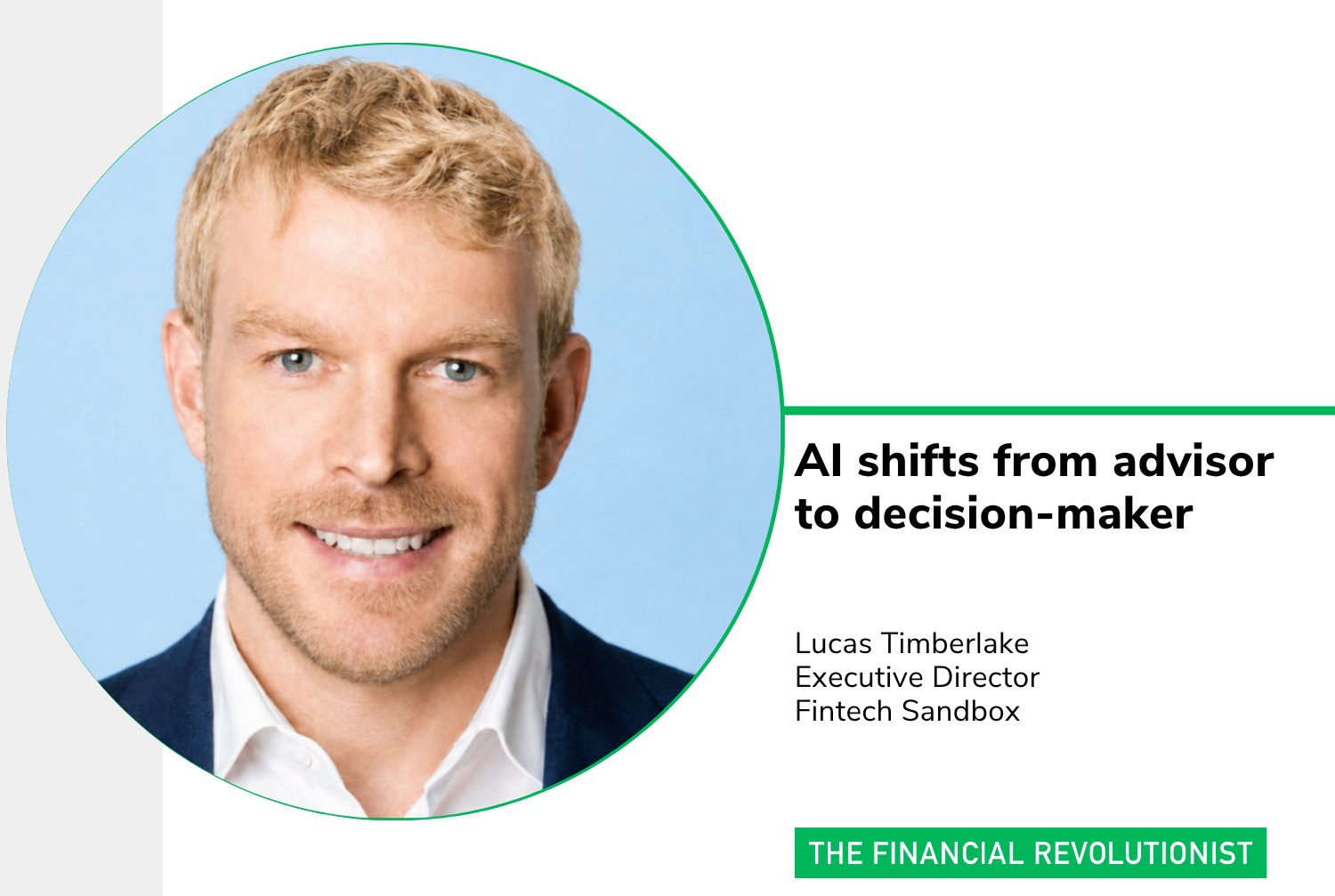
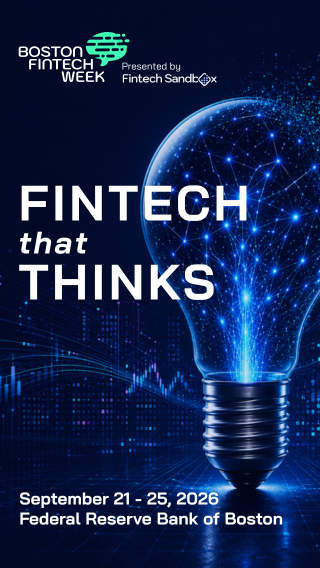
The FR sat down with Lucas Timberlake, executive director of Fintech Sandbox, to discuss the AI-enabled shift in financial services and what to expect at Boston Fintech Week 2026, taking place Sept. 22–25. Now in its ninth year, the week is anchored by the Fintech Sandbox Innovation Forum, a two-day ticketed conference on Sept. 22–23 at the Federal Reserve Plaza.
This interview has been edited for length and clarity.
As AI transforms the industry, this year’s theme is Fintech That Thinks. What does that mean and why now?
I can’t say I was clever enough to come up with the theme; that recognition goes to Nicole Edwards, our Head of Growth! But it captures the moment we’re in well. For the last two years, most of the industry conversation has centered on whether financial institutions should adopt AI. That question is settled. The conversation has shifted to where and how to deploy it responsibly at scale, and what happens when software moves from making recommendations to taking action. Fintech That Thinks is the framing for this shift. The Boston Fintech Week agenda this year explores real-world use cases behind AI-enabled financial services and doubles down on the harder questions that come with it: what happens when money starts making the decisions? Who is accountable when an agent moves funds, underwrites a loan, or flags a transaction? What data and governance does that require? These are no longer hypothetical.
What makes this year any different from the previous eight?
This year’s Boston Fintech Week stands out to me more than any other because we’re entering a period of continuous innovation in financial services. For most of the fintech era, innovation has been incremental. You’d see a better interface, a faster rail or a cheaper way to do something the industry already did. What we are seeing now is altogether different. These new-to-industry products and services leverage novel and different technologies, drive different customer behavior and open new markets for fintech that didn’t exist before. There are three threads that run through this:
● Agentic AI: Software that takes actions in financial workflows rather than surfacing suggestions to a human. This is where the biggest opportunities, but also the biggest governance questions, sit.
● New rails and programmable money: Real-time payments, stablecoins and tokenized assets are moving from pilot to production, and they fundamentally change what is possible when you combine them with AI.
● The new reality in financial services: AI has moved from an emerging technology to an active force reshaping financial services. Now it’s up to financial institutions and fintechs to determine what happens when AI becomes embedded in products, infrastructure and decision-making.
Last year’s event welcomed more than 2,500 attendees from over 23 countries, with 120-plus speakers across 37 sessions. This year, we expect to surpass this!
Who is on the mainstage this year?
We have an incredible lineup of speakers on the agenda, and what I like about this year is the great mix of voices we have brought together. There will be leaders from traditional financial institutions, investors and fintechs that have participated in our Data Access Residency Program, and together they are some of the top minds determining what AI’s role in financial services actually looks like. Confirmed speakers include:
● Ashley Nagle Eknaian, chief digital officer at Eastern Bank
● David Jegen, co-founder of Fintech Sandbox and managing partner at F-Prime Capital
● Hans Morris, managing partner at Nyca Partners
● Jelena McWilliams, president of corporate and external affairs at Plaid
● Mohit Kansal, chief payments officer at Flywire
● Peter Hazlehurst, co-founder and CEO at Synctera
● Sears Merritt, chief information officer and head of enterprise technology and experience at MassMutual
● Sarah Biller, co-founder of Fintech Sandbox
In this list we have a bank CDO and an insurer’s CIO sitting alongside the people building payments, banking-as-a-service and data infrastructure, plus two of the most experienced fintech investors in the country. We know that the shift to an AI-first financial services industry won’t happen in one pocket of the community and our lineup reflects this.
What can you tell us about Boston Fintech Week’s programming and the venue for 2026?
We are thrilled to be back at the Federal Reserve Plaza for our keynote conversations. The Federal Reserve Bank of Boston has been a long-term supporter of our efforts at Fintech Sandbox, and it feels fitting to debate the future of money inside a building that represents such a crucial part of the financial system.
The Innovation Forum on Sept. 22 and 23 is the main stage with fireside chats, panels and keynotes built around the theme. But more than this, Boston Fintech Week has always been a collaboration with the broader ecosystem, and the rest of the week I credit to our community partners and sponsors who host a myriad of their own programming across the city. We’re especially excited for the International track, which brings a global perspective to Boston Fintech Week and connects our local ecosystem with innovators and leaders from around the world. The Women in Fintech track, which creates space for additional voices and perspectives across the industry, is another element of this year’s event that we are excited to feature.
I’m looking forward to also stopping by as many of these fantastic parties, breakfasts and other incredible networking events that our community partners are hosting. Perhaps, there may even be a pickup basketball tournament?
Fintech Sandbox is a nonprofit built around early-stage founders. How does that mission show up in the week?
Our mission is the reason Boston Fintech Week exists. Fintech Sandbox gives early-stage fintech startups free access to critical datasets, APIs and infrastructure through our Data Access Residency. No fees, no equity. More than 450 startups have come through the program, and the only thing we ask in return is that they share what they have learned with the residents who come after them.
Boston Fintech Week is this community vision brought to life. Founders get to sit in the same room as the banks, insurers, investors and regulators they need to reach, and those institutions get an unfiltered look at what’s being built that is moving the industry forward. We make sure that there are free tickets available for eligible early-stage founders for exactly this reason. We also offer student tickets to help build the future fintech workforce and create moments for these students to connect with the fintech community.
This is your first year organizing Boston Fintech Week. What are your goals?
Personally, I want to embed myself even further in the Boston fintech and financial services community, even if I am still a New Yorker at heart. Boston Fintech Week started as a grassroots gathering in 2017, and the reason it has grown into what it is today is that the community shows up and builds it with us. My role this year is to protect and promote that.
For the event itself, our goal is simple. We want those who attend to leave with a sharper, more clear-eyed view of what “intelligent finance” actually means and what it will take from all of us involved to build it responsibly.
Tickets for the Fintech Sandbox Innovation Forum are available at luma.com/fintechthatthinks. The full Boston Fintech Week agenda is at bostonfintechweek.org/agenda.