Navigating payment velocity in the AI era
/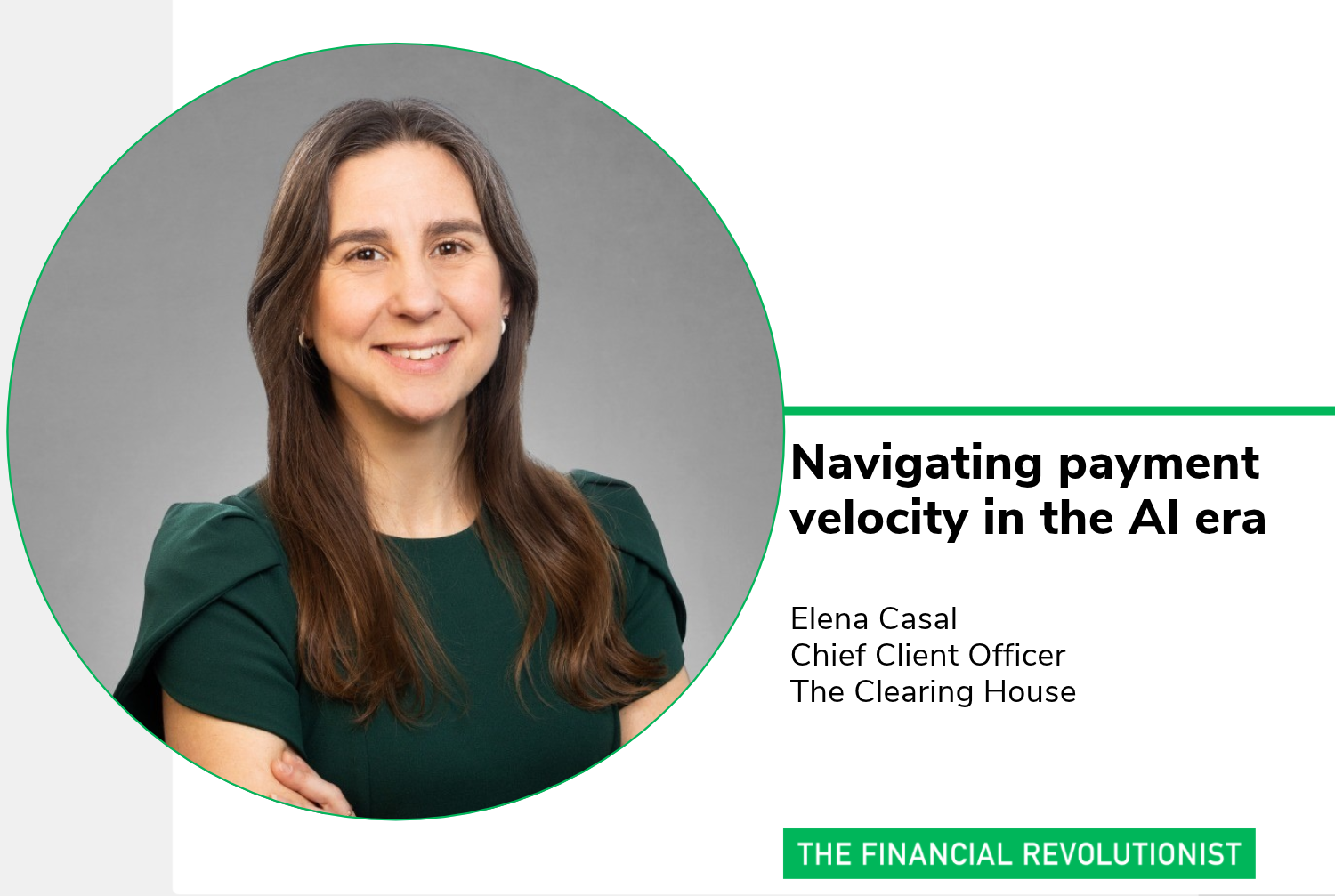
Banks are processing more payments around the clock while preparing for AI agents to make transactions on customers’ behalf. What will it take to support these changes and keep customers’ money and data secure? The FR sat down with Elena Casal, chief client officer at The Clearing House, to discuss instant payments, AI agents and tokenized deposits ahead of the 2026 TCH Annual Conference, taking place Nov. 17-18 in New York.
How are AI agents affecting how banks approach customer consent, data access and payment security? Where do existing safeguards fall short?
AI agents introduce new complexity as they move from providing information to initiating transactions and making decisions on behalf of customers. Many financial institutions are implementing safeguards to ensure appropriate controls are in place as transactions are being initiated. Consent and authorization are critical, and financial institutions need to know who authorized an agent, what actions it can take, and under what conditions.
Keeping bank account data secure is paramount and requires a multi-layered approach, with financial institutions, customers, fintechs, and payment operators all playing a part. For example, The Clearing House DDA Token Service helps protect sensitive bank account information by replacing account numbers with tokens across the RTP® and EPN® networks, enhancing security and control in digital payments and Open Banking. This conceals bank account information (routing and account number), which is important.
Also, if a token is compromised, the token can be canceled immediately. More than 30 million DDA tokens are in use, demonstrating how established payment infrastructure can help protect customer information as digital transactions expand.
Beyond account-to-account transfers, what high-value use cases are driving commercial adoption of instant payments today, and what barriers remain?
As we reflect on 2026, commercial adoption is accelerating. The RTP network processes more than 1.6 million payments and $6 billion daily, with more than 400,000 businesses and 8 million consumers originating payments each month.
The RTP network's $10 million transaction limit supports higher-value commercial and treasury use cases, including cash concentration, supplier payments, merchant funding, and portfolio rebalancing.
The demand for always-on payments is clear: 46% of RTP payments occur outside traditional banking hours, giving businesses greater flexibility and control over cash flow and working capital. RTP processes more than 95% of U.S. instant payment volume, with more than 1,400 participating banks and credit unions, providing proven infrastructure for expanding commercial use cases.
The RTP network is continuing to evolve to meet customer needs as we launch One-Leg-Out (OLO) capabilities for cross-border payments and more flexible sending models, including Indirect Domestic Send (IDS) and On Behalf Of (OBO). These enhancements expand use cases and also broaden the reach of the network by allowing banks to enable RTP send with partners/customers.
We are still seeing some adoption barriers remain, including legacy system integration, identifying clear use cases for each commercial customer, and the need for financial institutions to develop instant payment strategies to meet client needs.
What needs to change in banks' infrastructure and risk controls for tokenized deposits to move from pilots to broader commercial use?
As we look ahead to 2027, interoperability is essential. Tokenized deposits must connect across blockchain platforms and with established payment networks to achieve commercial scale. Tokenized deposits are commercial bank money, maintaining the trust, governance, and settlement certainty of the banking system while enabling programmability, automation, and 24/7 settlement.
The On-Chain Money Initiative for tokenized deposits has two complementary components: On-chain connectivity between financial institutions, and a connectivity layer linking tokenized deposits with established payment rails, the RTP and CHIPS networks, to allow fiat clearing and settlement to happen in a coordinated manner.
The future is multi-rail. Tokenized deposits will complement and not replace established payment networks, enabling banks to offer new capabilities. At the same time, they can tap trusted payments infrastructure that FIs and corporate customers rely on every day.
How do payment infrastructure and fraud defenses need to evolve together as banks prepare for 2027?
Payment modernization and fraud prevention must advance together as instant payments, AI agents, and tokenized deposits create new opportunities and risks.
Of course, fraud prevention requires a multilayered approach. FIs, payment operators, technology providers, and customers all play important roles through authentication, transaction monitoring, analytics, and information sharing.
Resiliency is critical to maintain trust. The Clearing House clears and settles more than $2 trillion daily across its networks, with a track record of close to zero downtime across its core payment systems.
The future requires a connected, multi-rail ecosystem: RTP for instant payments, CHIPS for high-value payments, EPN for ACH, and emerging tokenized deposit capabilities, each supported by appropriate risk controls.
How will the 2026 TCH Annual Conference explore these issues, and what should banking and payments leaders expect to take away from those discussions?
The TCH Annual Conference, November 17–18 in New York, will bring together banking executives, payments leaders, and industry experts to examine the future of payments and financial infrastructure.
Tokenized deposits, instant payments, AI, and payment modernization will be important themes as banks evaluate emerging technologies and new commercial opportunities. Tokenized deposit discussions will focus on moving from strategy to execution, including infrastructure decisions, bank readiness, operating models, governance, and interoperability with established payment systems.
Attendees will gain practical perspectives on modernizing payments, identifying new payments use cases, especially for tokenized deposits and RTP, strengthening fraud defenses, and preparing their institutions for 2027 and beyond.
The industry is changing rapidly with digital assets playing a larger role in a multi-payments rail future. The Clearing House is enhancing the payment networks financial institutions rely on today while building the connectivity needed for what's next—with trust, resiliency, and interoperability at the foundation.