Rethinking payment recovery
/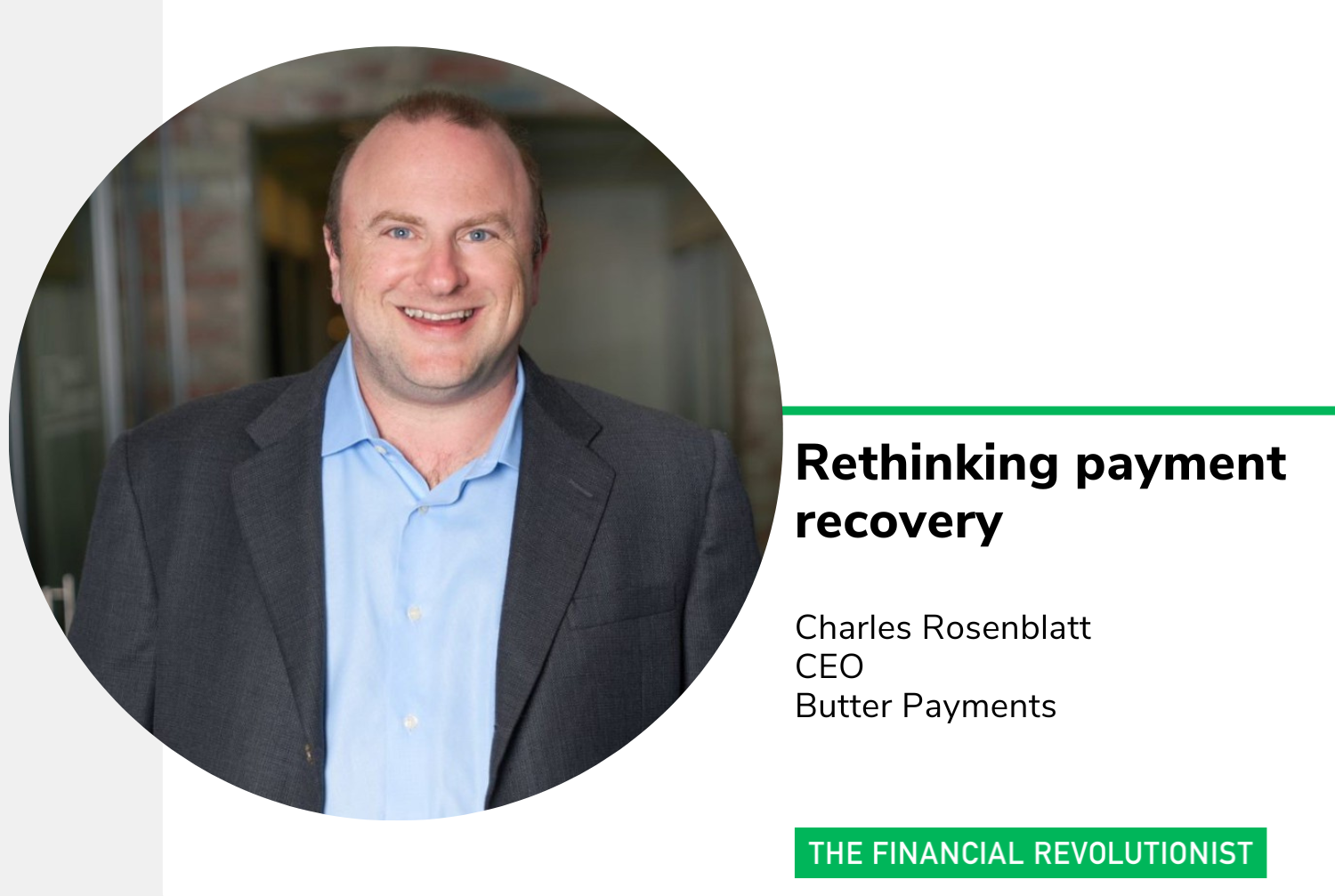
Charles Rosenblatt is the CEO of Butter Payments, an agentic AI-powered payment recovery platform, focused on subscription and recurring revenue businesses.
1. What’s the biggest problem merchants still underestimate when it comes to failed payments and churn?
The biggest issue is that many merchants still treat failed payments as a narrow operational problem instead of a core business signal. A payment failure is often the first visible sign of a deeper issue, whether that’s customer affordability, engagement, trust, or timing. Too often, it’s handled with blunt retries or generic dunning that ignores context.
What we see across the market is that merchants spend heavily to acquire customers, but once a payment fails, the response is often disconnected from a broader retention strategy. That leads to unnecessary churn, damaged customer relationships and missed revenue. The opportunity is to treat payment recovery as part of the customer lifecycle, using data to decide when to retry, when to communicate, how to communicate, and when to step back. The shift from recovery as a tactic to recovery as a strategy is still early for many businesses.
2. What’s your vision for Butter over the next one to three years?
Five years ago, Butter transformed the payments space by introducing subscription brands to involuntary churn reduction through machine learning. I’m proud to say that we’re the originator and the leader in the space, and that we’ve collected billions of pieces of payment data, that’s enabled us to continually optimize our models.
Looking ahead, we’re going to build upon our previous successes and expand our scope to solve more holistic issues like improving customer retention and lowering customer acquisition costs. These are challenges every subscription brand and recurring payments business face.
Payments Score uses Butter’s massive payment dataset to predict which customers will or will not pay for their subscription prior to the start of payment recovery efforts. With this product, merchants have the ability to accurately judge the value of a subscriber and determine the optimal recovery strategy.
The second product is Outreach. This solution uses Butter’s patented machine-learning technology to determine the best outreach strategy for failed payments: email, SMS, silent recovery, or a call.
With these products, merchants will now be able to centralize their payment recovery efforts — automated retries and dunning communication — into one platform, boosting recovery rates and retention while eliminating internal complexity.
These products are just the start. In the next 1-3 years, we are going to expand our platform further and provide even more incremental value to our customers with tools that they can incorporate into their own processes or allow us to operate.
I probably sound very much like the rest of the world today, but moving toward a data-based business and leveraging agentic AI are critical for our business and our clients. A data-driven approach will improve-decision making and help merchants better understand their customers' preferences and behaviors. Agentic AI is a scalpel, while other AI tools are sledgehammers. With agentic AI, merchants can solve complex business challenges faster and more accurately because it is designed to be exceptional in one specific task instead of average at many.
We are huge fans of agentic AI at Butter, and our new products show this. With the launch of Payments Score and Outreach, we’ve built the first agentic AI-based workflow automation platform that optimizes both the channel and messaging merchants use to recover payments.
3. What advice do you have for subscription merchants?
In any business, it’s key to think about the whole lifecycle of a client. Too many merchants focus on acquiring as many customers as possible and not enough time on acquiring the right customers, the ones that will stay with them for a long time. Personally, I believe it’s a waste of money to attract a shopper only for them to then turn around and leave after one purchase. Merchants should spend more time digging into their retention metrics and customer lifetime value. It’s critical to know what revenue is generated by retaining customers.
4. How would you describe your leadership approach, and how does it support Butter’s customers?
My leadership approach is very high-touch with my customers, while being hands-off with my employees, allowing our great team to do their jobs and do them well.
With our customers, I believe that we need to be responsive, but, more importantly, we need to understand their goals and anticipate their needs. This is why I’m so excited for our new products, which we built based on our customers' feedback around their non-met needs.
Internally, we have an amazing team, and my goal is not to get in the way and mess up what they are achieving. I view myself as a guide to help the team navigate complex paths, prioritize decision-making, and amplify their positives.
I will also bring a more analytical approach to decision-making at Butter. Having calculated and overseen profit and loss statements my entire professional career, I am comfortable making numbers-driven decisions. This focus, combined with our great people, is a formula for success.
5. What kind of culture do you envision building at Butter?
When you have a leadership change, it’s always a balance between keeping the elements of the culture that have made Butter a great place and infusing a bit of what I’ve seen be successful over my career. What I plan to emphasize is the importance of aligning on business goals and treating everyone, customers and fellow employees, with respect.
Ultimately, I want Butter to be a customer-first organization where we assume there is positive intent with every action.