SaaS isn’t dying. It’s being valued differently.
/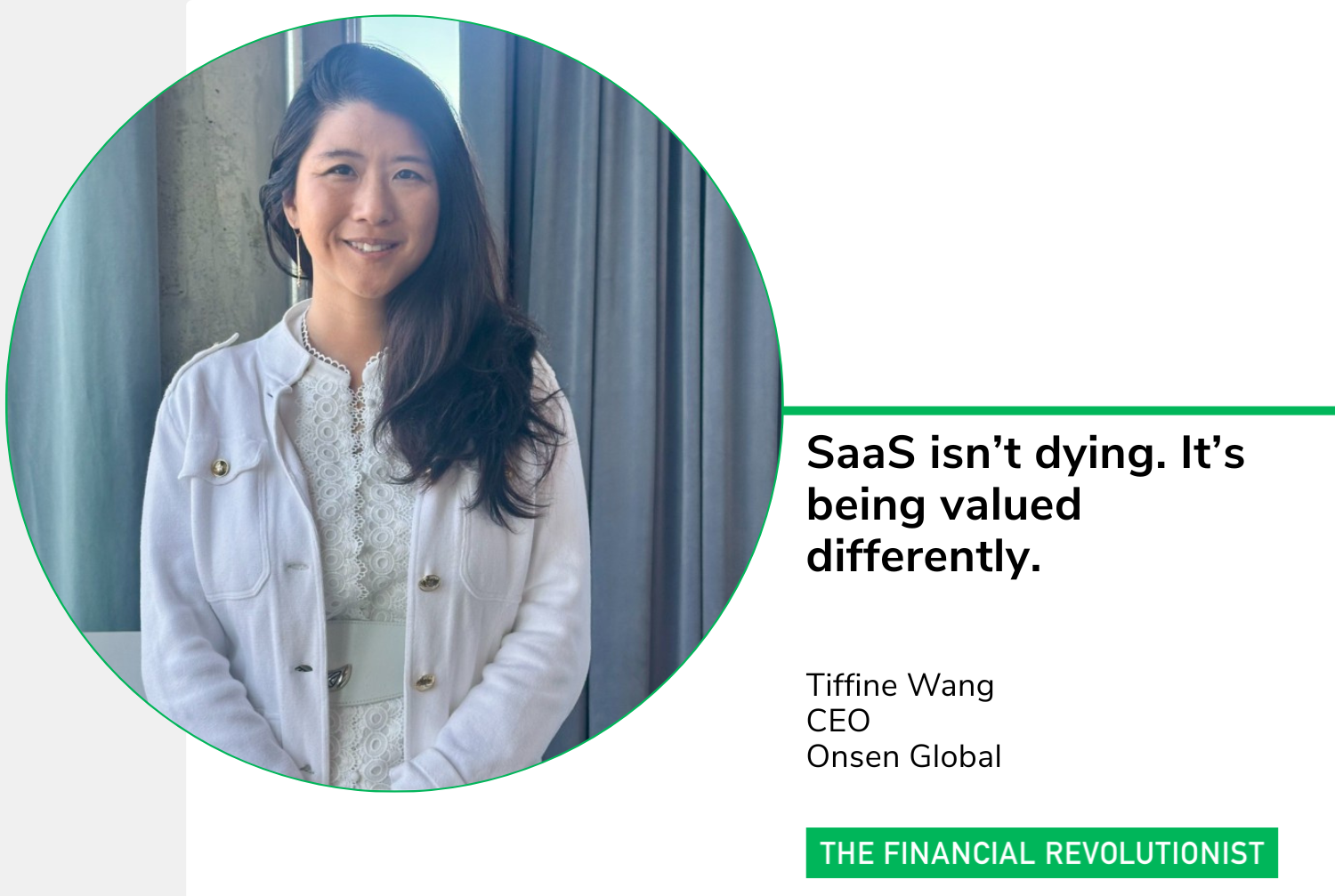
Tiffine Wang is a global venture capitalist focused on AI and tech, along with board advisory.
The term SaaSpocalypse suggests collapse. The fear is that AI-native startups are cannibalizing incumbents, per-seat models are unraveling, and the predictability that justified premium multiples is fading. In other words, recurring revenue is structurally broken.
But that interpretation overstates what's actually happening. Markets are not pricing the end of SaaS. They are repricing what software represents economically. We’re moving from software as a tool employees use to software as a system that performs work itself. Valuations are adjusting to that shift.
Let's take a look at what's driving it.
In my September column, I argued that AI-native companies are rewriting how revenue is earned as pricing shifts from static subscriptions toward tokens, compute, and outcome-based models. That change introduces more volatility and forces investors to rethink what “quality of revenue” means. I also pointed to the tension emerging in the market: customers want usage flexibility, but they still require budget predictability. Hybrid structures are becoming the practical middle ground.
From per-seat to per-output
That transition is now reflected in valuations. For more than a decade, SaaS earned premiums because its economics were predictable. Companies sold access. Pricing was per seat. Expansion followed hiring. Gross margins scaled. AI-native companies often operate under a different architecture. They monetize output.
A legacy support platform charges per agent. An AI-native system may price per resolved ticket. A CRM charges per sales rep, while an AI sales agent may price per meeting booked or include a revenue-share component.
In reality, few enterprises are moving fully to pure outcome-based pricing. Contracts are experimental. Some combine a base subscription with usage-based AI. Others include minimum commitments with performance-linked upside. In certain cases, pilots are structured around shared savings.
Meanwhile, enterprises need budget predictability. Vendors want pricing aligned to measurable value. This is resulting in a period of hybridization and discovery.
The new economics of software
The economic unit is shifting toward output, but how that output is priced is still evolving. That uncertainty is part of what markets are repricing. Some AI-native solutions assist workers. More are beginning to perform parts of the job themselves. Pricing follows that shift. If an AI system closes sales or automates underwriting, it is no longer just another line item in a software budget. It competes with payroll. The benchmark moves from SaaS spend to labor cost, and that changes how investors assess durability.
Per-seat revenue is simple to model. Usage-based or outcome-based revenue ties growth to workflow volume and economic activity. Revenue scales with output rather than employee count. If software displaces labor and becomes embedded in production, the addressable pool expands from IT budgets to operating expenses. The underwriting focus then shifts to three factors: declining inference costs, measurable cost displacement and deep workflow integration.
Activity alone, especially when it carries real compute cost, will kill a company. Automation without clear economic leverage is easy to swap out. Durable value comes from being embedded in core operations and delivering financial impact that materially outweighs the cost to run.
The SaaSpocalypse story sounds like collapse, but the market is really adjusting to a shift. Software is starting to act more like labor than a simple tool. That changes how it is valued. What matters now is whether a product clearly makes money, saves money, or increases output.