Prediction markets are becoming Wall Street’s next asset class
/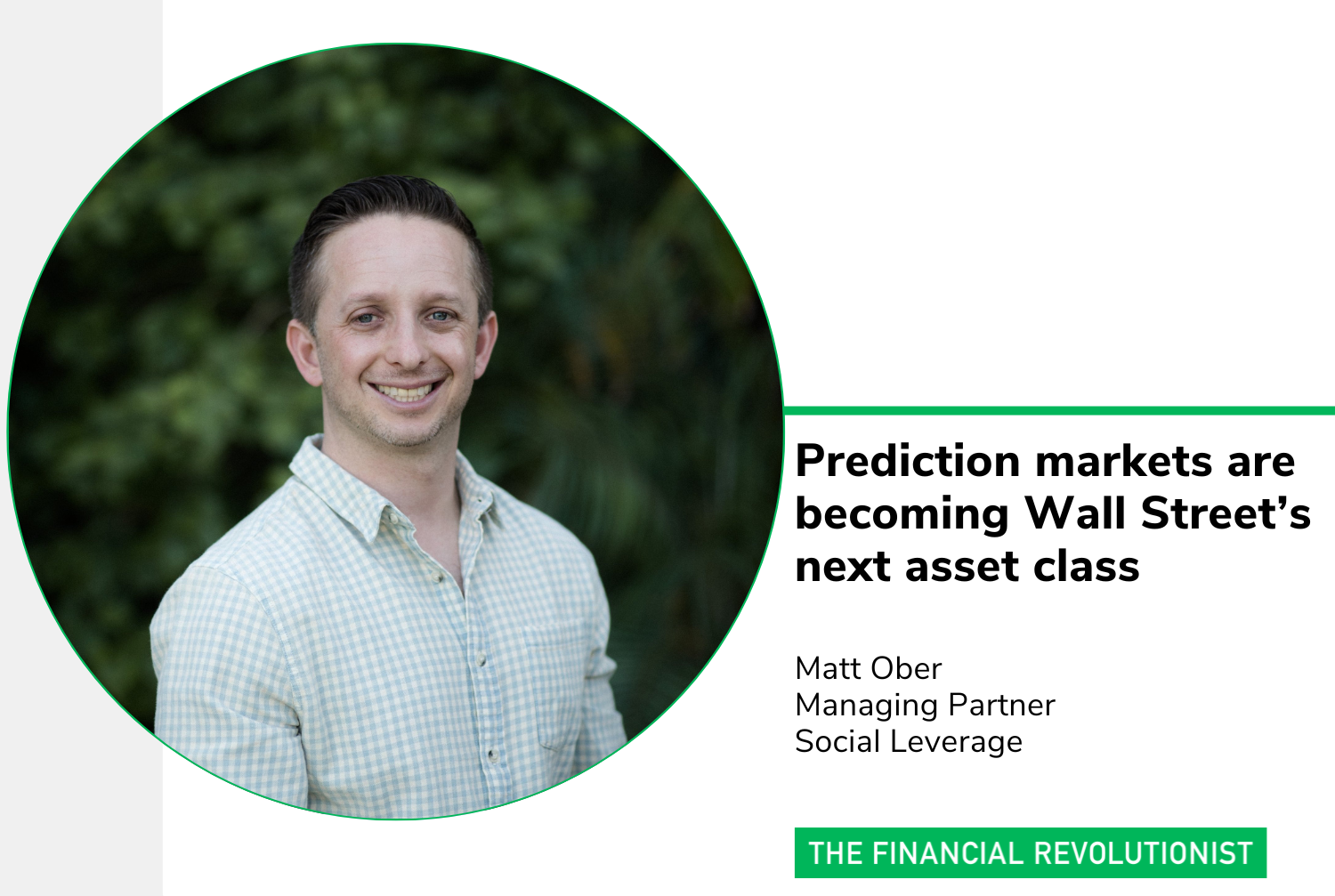
Matt Ober is a managing partner at Social Leverage. Matt was most recently the chief data scientist at Third Point, where he built the data analytics and technology platform used to enhance the firm’s investment capabilities in equity, structured credit, venture capital and cryptocurrency.
The prediction markets conversation has thus far focused on sports and politics. That's about to change. The market that will pull in serious institutional money isn't whether the 49ers cover the spread. It's something hedge funds have spent years and millions trying to solve: forecasting corporate KPIs before earnings.
Think markets where you can predict Uber's rides last quarter, DoorDash deliveries, or Tesla vehicle deliveries. Hedge funds, especially the pod shops, are spending a ton of time and effort forecasting quarterly earnings. But the teams, especially data science teams, have always been good at using unique data to predict the KPIs.
You can't control whether the stock goes up or down on earnings announcements. But now you can make money by being the most accurate in predicting KPIs. Or even use prediction markets on KPIs as a hedge.
When I worked at a hedge fund, we used credit card data, foot traffic, camera footage, satellites, and endless other sources to predict KPIs. And we were very accurate, and even more importantly, we were great at being directionally accurate (beat or miss). Now this is a whole new market of opportunity to place your predictions on these KPIs.
This is the market that brings in billions from institutional traders. It's a no-brainer.
KPI markets are already live. Kalshi announced their partnership with fiscal.ai, and other prediction markets are soon to fast follow with their listing.
These markets are nascent but moving fast. As they develop, they will fall even more into institutional use and hedging.
Why Wall Street is paying attention
I think about prediction markets as another type of investment, like an asset class. You have options, you have futures. Prediction markets will fall into that. The CME and others are coming. ICE is a 20% owner of Polymarket — they put $2 billion in. The institutions are coming.
The regulatory picture is still unsettled. Robinhood did their homework and decided this is not something that needs a gambling license like FanDuel and DraftKings. The CFTC has put out opinion pieces recently siding with prediction markets on that. FanDuel and DraftKings are also rolling out their own prediction markets. I think it's going to play out. Ultimately, prediction markets aren't going anywhere.
Do I want to see sports in brokerage apps and prediction markets? Yes. We can't bet in California on sports, but as of today, we can predict. Do I think everyone wants gambling to be associated with their retirement accounts? No. But I think many people don't care either.
My guess is that there is a big push from the casinos and gambling apps in Washington to give the power back to the states. The consumers want predictions, and they want it for sports. I imagine this goes into lots of court cases and plays out for a long time. There is too much money at stake for Kalshi, Polymarket and ultimately the brokerage apps like Robinhood to go quietly. But I imagine DraftKings is quietly cheering for this Senate bill to pass.
The smarter investment angle isn't picking which prediction market platform wins. There's a picks-and-shovels opportunity. Analytics and data providers will be built around this. If the prediction markets have regulation of some sort and you need compliance tools — that's something that's interesting to me, because then everybody's going to need it. ICE did a really good job of getting exclusivity to Polymarket’s data. They've kind of cornered that part of the market.
In sum, prediction markets aren't a novelty. They're an asset class in the making, and the infrastructure, regulation, and institutional appetite to support that are all moving in the same direction.