How banks are becoming a new front door to e-commerce
/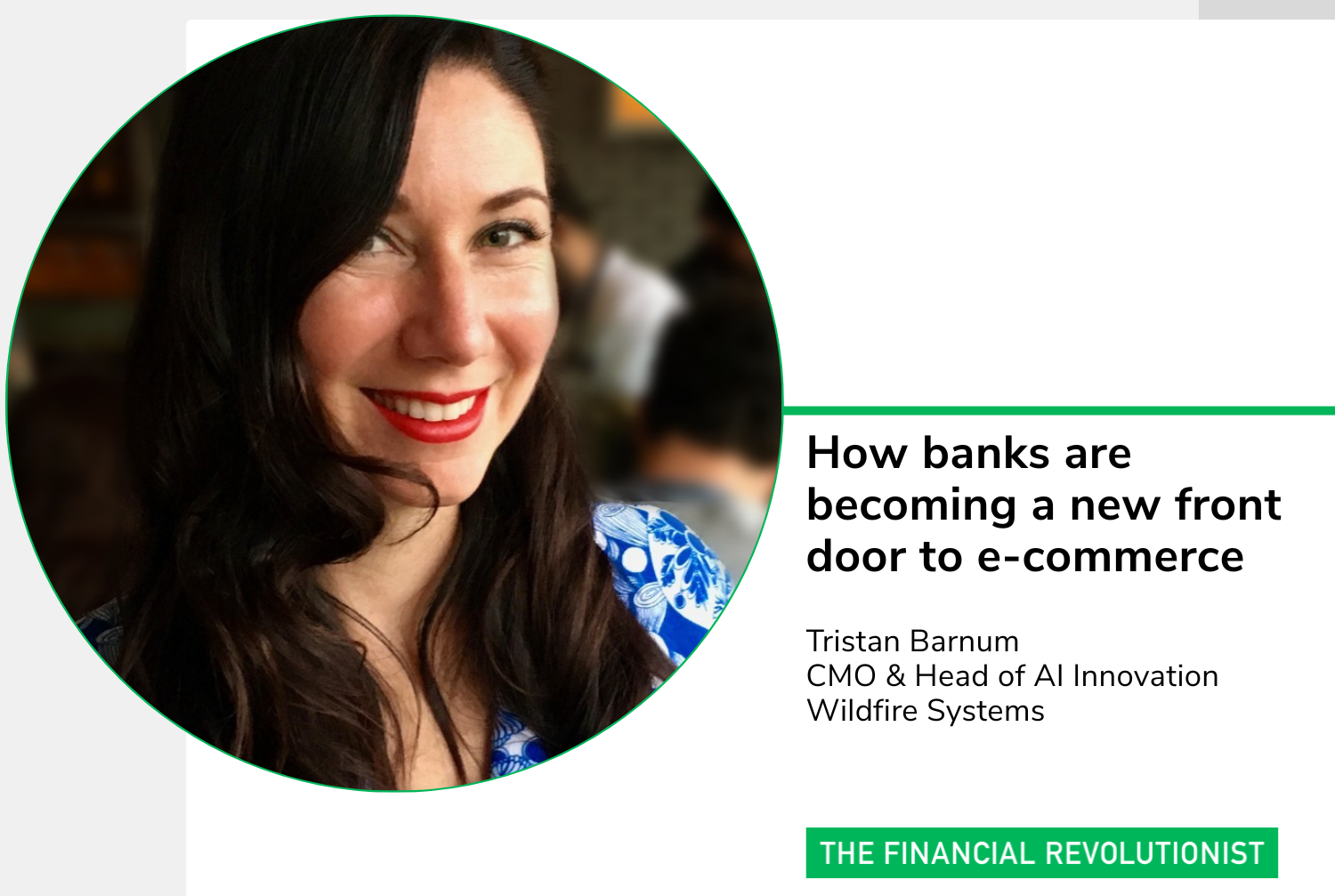
Tristan Barnum is CMO and head of AI innovation at Wildfire Systems, where she works with brands, banks, and platforms on how AI is changing the way people shop.
Financial institutions have typically stood on the periphery of the shopping experience. They were a silent utility, the pipe through which money flowed, and only visible when a transaction was declined or a statement arrived. But a shift is redefining the relationship between banking and retail. The era of banks being just a "transactional utility" is ending, and in its place, banks and credit unions are quietly emerging as the unexpected gatekeepers of digital commerce.
The convergence of fintech, retail, and banking is underway. Financial institutions are reclaiming influence over how consumers browse and buy, effectively turning their mobile apps into gateways for shopping, rewards, and cashback.
Banks are moving further upstream in the shopping journey, using rewards, data, and embedded tools to influence how and where consumers spend. The change is turning banking apps into commerce channels, not just payment endpoints. For executives looking to evolve from an invisible backend payment utility into a helpful daily companion for the customer, the data is clear: the battle for top-of-wallet status will be won by those who embed themselves directly into the shopping journey.
The new economic reality: rewards as a financial necessity
To understand why banks are pivoting to e-commerce, we must look at the consumer's wallet. Inflation and the cost of living have altered how Americans view loyalty programs, possibly for good. Rewards are no longer just a "nice-to-have" perk for points-savvy travelers; for many consumers, they have become a practical way to offset everyday costs.
According to Black Friday 2025 data from PYMNTS Intelligence, consumers are actively using rewards to subsidize everyday spending. During the 2025 holiday season, more than one-third of consumers struggling financially used credit card rewards or loyalty points to cover their purchases. This behavior extended across income levels, with 40% of high-income households earning over $150,000 also leaning heavily into rewards to pay for purchases.
For Generation Z, using rewards as a financial tool is even more prevalent. Over half (52%) of Gen Z consumers used rewards to cover holiday spending, and nearly 50% selected merchants specifically based on reward value.
This behavioral shift presents a unique opportunity. When banks offer embedded shopping rewards, like cashback, offers, and coupons, they are helping their customers by providing tangible financial assistance. Flexible, transparent rewards programs that offer immediate visibility and redemption options can influence payment tender choice as the customer shops, effectively "locking in" loyalty to that tender even before the customer checks out.
From transaction history to shopping intelligence
As third-party cookies continue to be deprecated and traditional digital advertising loses its efficacy, first-party data has become the gold standard. Financial institutions sit on a valuable dataset: the source of truth for where and how customers’ money is spent. However, transaction history alone is backward-looking. More value can be added from anticipating intent.
Sean Sanchez, SVP and head of client services at FirstBank, recently noted that by integrating shopping enablement tools directly into banking apps, institutions can bridge the gap between "capacity" (what a customer can spend) and "propensity" (what they are likely to spend).
When a customer browses certain merchants’ offerings from within a banking app's rewards portal, the bank gains more insight into that customer’s intent than a basic transaction recorded after the fact. This approach aligns with the growing demand for personalization. A recent Bain & Co. study found that 70% of consumers want their primary bank to use their personal data to deliver more personalized experiences. But a gap still persists:60% of consumers would like rewards customized to their relationship with their card provider, but only 45% are satisfied with their current options.
Forward-thinking institutions are closing this gap by using AI to analyze shopping behaviors and deliver "stackable rewards," such as combining merchant discounts with card-linked offers. This turns the banking app from a static payment facilitator and transaction record-keeper into a dynamic shopping companion which builds robust customer profiles that allow for hyper-personalized engagement.
The app as a shopping originator
Major banks are already serving as the starting point for commerce, such as Capital One Shopping. The shopping tool reportedly connects users to over 100,000 merchants, driving transaction volume not just by facilitating payments, but by originating the sale.
This evolution blurs the lines between banking and retail. When a credit union member logs in to check their balance and sees a relevant 5% cashback offer for a store they frequent, the institution effectively bypasses traditional search engines, ads, and social media. The bank becomes the referrer for the purchase, typically earning affiliate commission revenue on a completed sale, and passing some of that revenue back to customers as valuable rewards.
Redefining loyalty in 2026
In a landscape where traditional ads are often ignored, influencer and social media marketing are viewed skeptically, and search results are cluttered.
Banking sites and apps remain a trusted environment..
By embedding commerce and personalized deal-finding tools, financial institutions are doing more than just facilitating transactions. They are also validating their role in supporting a customer’s financial health. At the same time, they help customers stretch their paychecks through rewards, and surface better, more relevant deals by applying insights from shopping referral data.
The mandate for banks is to evolve from viewing loyalty programs and rewards as a cost center and start viewing ecommerce enablement as a strategic imperative.