How APIs are rebuilding the loyalty economy
/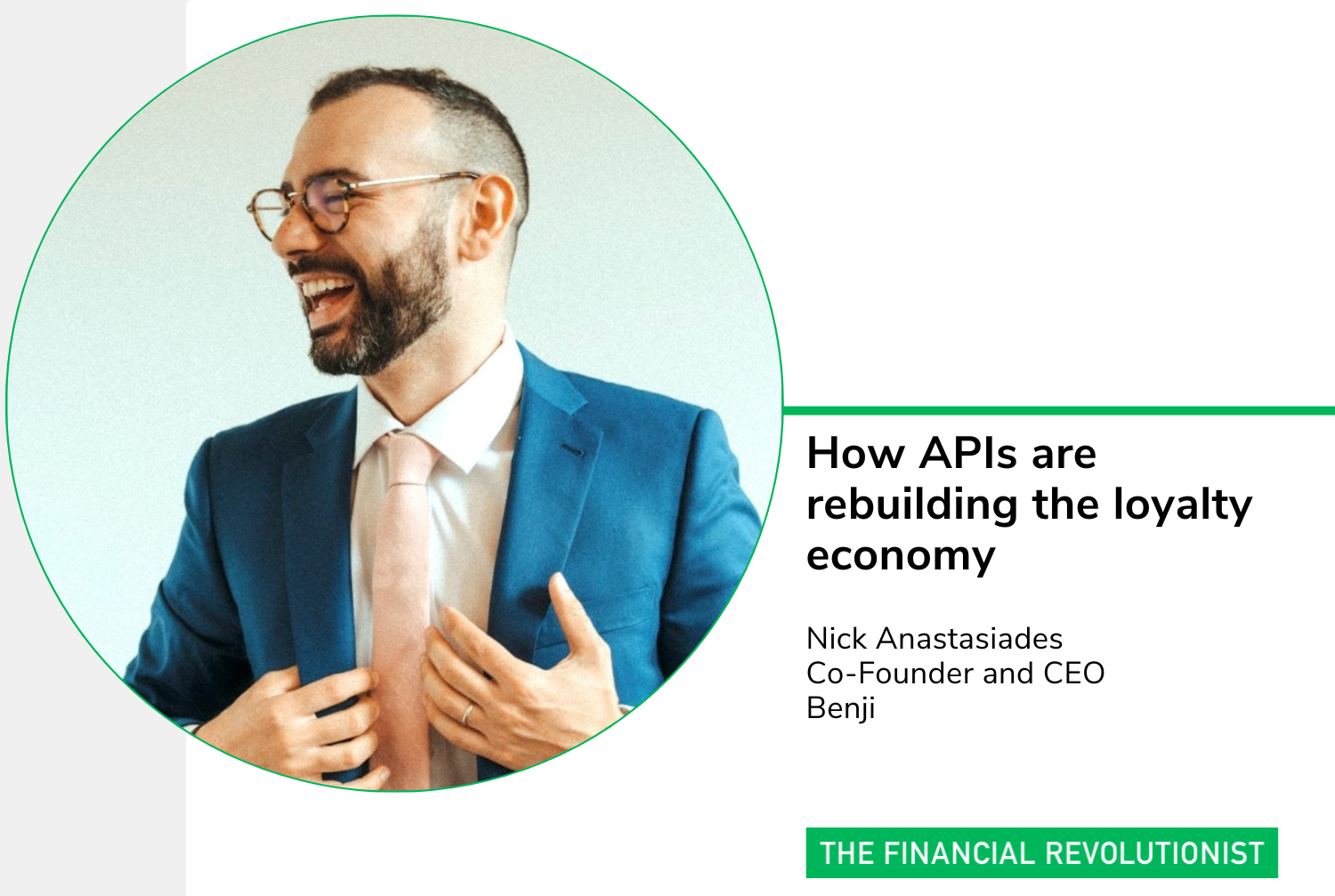
Nick Anastasiades is co-founder and CEO of Benji, a platform that helps brands connect loyalty programs through APIs.
Trillions of loyalty points circulate through the consumer economy. Most are confined to single programs. They represent significant economic value, yet points earned with one brand are often trapped there, unable to move across merchants or product categories. Many go unused.
Financial connectivity once faced a similar challenge. Banks and financial institutions operated through point-to-point systems that made sharing account information with connected services cumbersome and costly. APIs changed that. They created shared infrastructure that made financial data and account access more portable, innovation that ushered in a wave of new products and services.
The same dynamic is playing out in loyalty. API connectivity is helping programs work together, letting users earn and use rewards across programs. A consumer who earns points through a weekend hotel stay could apply those rewards toward a flight upgrade or a restaurant booking — without logging into separate accounts or navigating separate redemption portals.
APIs are also making loyalty partnerships easier to build and scale. Where brands once spent years and millions developing single integrations, they can now connect to multiple loyalty ecosystems at a fraction of the cost and time. With the global loyalty market expected to reach $214.7 billion by 2028, APIs are helping open a system that for years favored only the largest brands.
The old model
Over the last two decades, the biggest players could afford to plug directly into other major loyalty programs. Deals like airline–rideshare or coffee chain–carrier partnerships could take years to negotiate and build. Every connection was a one-off: new APIs or batch files, custom business rules and finance workflows that had to be stitched together and maintained. Most consumers who complete a qualifying activity wait six to twelve weeks to see a reward. Programs still run on rebate forms, FTP file transfers, and human teams manually crediting points. Smaller brands were shut out, and even incumbents could manage only a few of these flagship partnerships.
Any innovation in loyalty was slow and costly. Many partnership attempts didn't make it as timelines dragged and negotiations soured.
The old model also put a burden on consumers. To earn points across linked programs, shoppers had to do a lot of work. They had to fill forms, make manual requests and wait 8-10 weeks for points to show up.
That paradigm is beginning to change. Instead of building each partnership from scratch, loyalty providers are moving to standardized API-based infrastructure that cuts integration time and makes redemption instant.
The shift to APIs
The industry is moving to an API-first model that treats loyalty as a flexible service rather than a locked-in platform. That means loyalty becomes a set of building blocks teams can plug into what they already run. Product and marketing teams can switch rewards wherever customers show up, whether in apps, on websites, in stores, or inside partner experiences, without waiting on a vendor or rebuilding the program each time.
Partnerships that once took 12 to 36 months to launch can now go live in under six months. The integration itself takes two to three weeks. And instead of managing every relationship separately, brands can work through a single provider that handles sourcing, permissions, contracts and ongoing maintenance.
Consumer demands and balance sheets are pushing the change as much as the technology is. Regulators and analysts note that tens of billions of dollars in card and loyalty rewards go unused each year. According to the Consumer Financial Protection Bureau, U.S. credit-card holders had more than $33 billion in outstanding rewards balances at the end of 2022, highlighting how many points never convert into value. Consumers would benefit from more value and flexibility.
Digital assets and tokenized value add another layer of urgency. As more of finance and commerce moves toward programmable, interoperable assets, loyalty currencies that remain siloed and static will feel increasingly out of step. API-first loyalty engines create the conditions for greater interoperability, whether that is simple brand-to-brand partnerships or points that can coexist alongside other digital assets in wallets and ecosystems.
APIs remove the old one-to-one exclusivity model. Rather than choosing a single flagship partner and hard-wiring that relationship into their stack, brands can now connect to multiple loyalty ecosystems simultaneously and route different segments or campaigns to different currencies.
With tens of trillions of points and miles issued globally — often valued in the hundreds of billions of dollars — there is enormous liquidity waiting to move if it becomes easier and safer to earn and redeem across categories. As integration friction drops, loyalty moves from a side campaign to everyday commerce. It shows up in rides, deliveries, subscriptions and physical retail.
APIs turn points into portable digital assets. A traveler can earn airline miles buying cookies or rack up hotel points on grocery orders, or redeem card rewards against everyday purchases. These integrations can be done without the need to modify core technology systems. Consumers get clearer value and more flexible ways to use their rewards. Brands, meanwhile, face a lower barrier to entry and can test partnerships faster. Linked programs also deliver real-time insight into how rewards shape consumer behavior.
The opportunity
Through APIs, a loyalty-as-a-service approach supports cross-industry tie-ups that would have been logistically impossible a decade ago. Airlines can extend their currencies into coffee shops and retail brands and banks can drop personalized rewards into partner apps in real time. Retailers can join coalitions without having to build a new integration each time.
The next loyalty innovation won’t be yet another loyalty program or app; it will be an invisible connective layer that makes earning or redeeming value as simple as linking an account. As API-first loyalty becomes standard, the competitive advantage shifts from flashy features to having an open, flexible infrastructure that can follow customers wherever they go.