How a $4 billion community bank balances AI and the human touch
/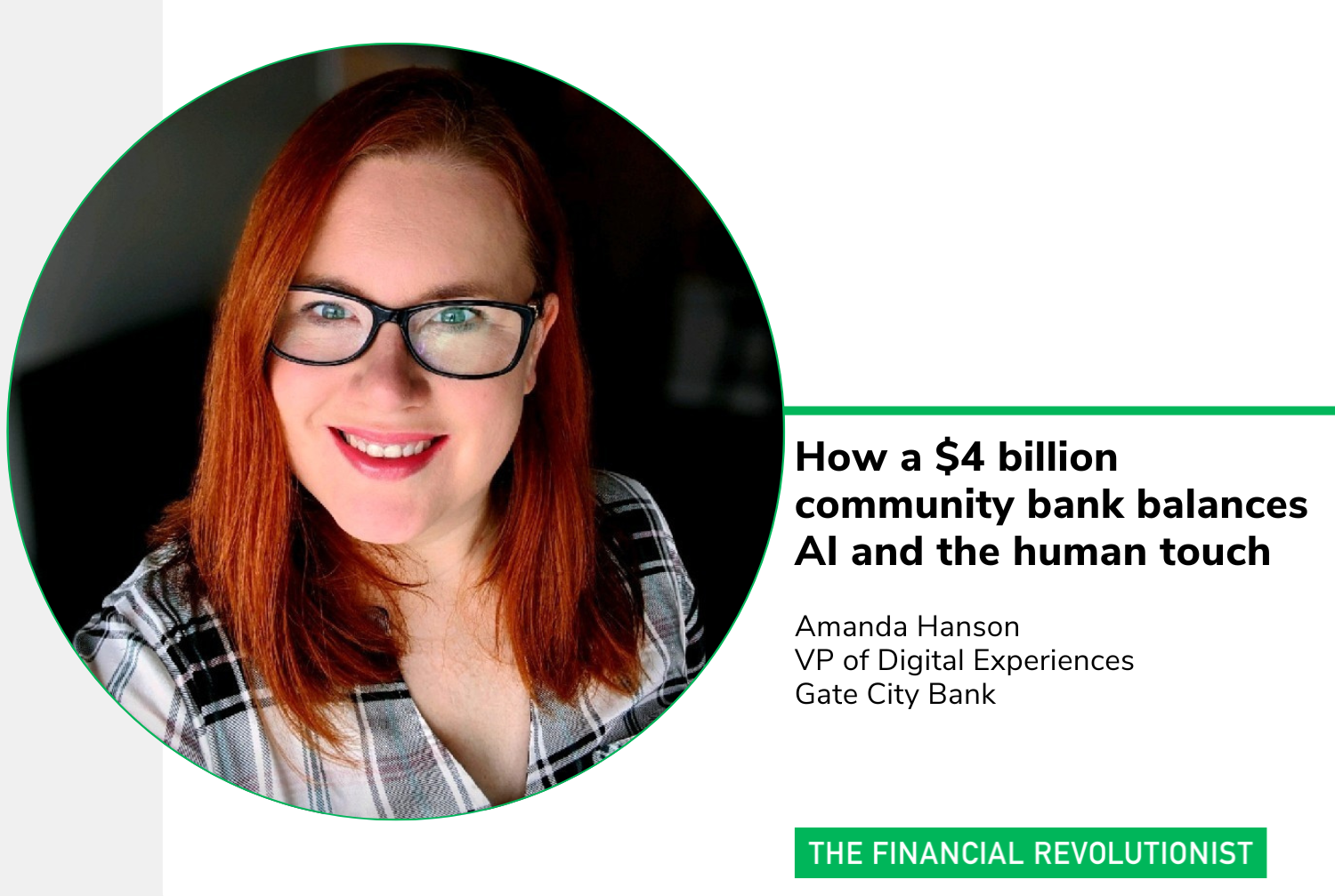
The FR sat down with Amanda Hanson, VP of digital experiences at Gate City Bank, a community bank with nearly $4 billion in assets operating across North Dakota and Minnesota. The conversation, which took place at the Alkami Co:lab 2026 conference in San Diego last month, covered how the bank is approaching digitization, AI adoption and customer experience as fintech competition intensifies. Comments have been edited for clarity.
As VP of digital experiences at Gate City Bank, what are you focused on right now?
I've got two teams — the digital experience team, a small and mighty team of two, and the digital banking operations team, which is our digital customer service arm. The challenge is balancing that forward-thinking strategy with making sure you don't lose those digital customer service moments. In today's world where someone can have three bank accounts open with different banks, you want to make sure the customer has moments where they feel connected to your particular bank.
How can community banks punch above their weight when it comes to becoming technology-ready?
There's real opportunity in the AI space: using it as a thought partner, doing research, being in the driver's seat with it helping you along the way. And then having a very good vetting process for technology partnerships. Look not just at what a tool does today but at the culture of the company, the strategic thinking and the long-term vision.
How are you looking at AI adoption, given that the relationship model is the core offering for community banks?
We're in the firming-up governance phase of our AI strategy. We want to leverage AI to create internal efficiencies first, and do that with solid governance behind it. We're working on a fairly fast approval system internally: simple things that aren't making final decisions for people go through one set of approvals, versus something spitting output to a customer.
We have to be careful when using AI to churn out communications. We've protected our brand heavily for 100 years. I don't want to see AI-generated content where every fourth paragraph doesn't have our brand voice.
Does punching above your weight from a technology perspective mean more vendors or fewer?
It's definitely not more vendors that are disparate and don't have good partnerships between each other. The connectivity between tools is really the important piece. If you've got somebody with a good strategy around honing and refining partnerships and the ability to move quickly on integration, that's what matters — regardless of who owns each vendor.
Fintechs like Chime and SoFi are competing for customers. As a smaller community bank, what's your plan to grow and retain customers?
The key to everything is customer service. How do we bring the customer service we've had for over 100 years into the digital age? We have a very personal experience. In any of our branches, there are fresh baked cookies. We have our own coffee blend. How do we take that level of service to digital self-serve without it feeling cold? I'm also watching the Mr. Beast/Step acquisition closely — there's a whole generation of kids that will follow that man off a cliff. How are we approaching financial education for those kids and engaging with them digitally?
What does Mr. Beast’s Step acquisition represent to you? Is the relationship between the customer and the financial institution changing?
It's something that's been happening for a while. Younger generations are getting financial education from YouTube, TikTok, etc. Some of it is solid advice, some is not. It’s about how we continue to be that community resource and build that trust.
As young people get financial advice from social media, what is the bank doing to ensure its voice reaches the intended audience?
We don't work with a lot of influencers, but we are leaning into the local angle. We do some work with a beloved local weather guy who now does weather on YouTube. We do fun engagement videos — bankers are people, kind of highlighting that message. We've made good reach into translating trends in short-form video into something fun that applies to the bank.
As technology gets cheaper and more accessible, what's the real differentiator for community banks?
With how fast everything is moving, it's most important to not forget the human piece. Technology is going to get faster and cheaper and more accessible — everybody will be able to do it. Right now digital is in a lot of cases your differentiator, but there's going to be a moment where it comes full circle. The people who don't forget the human piece are going to be the people that win.