The state of AI, from tools to systems
/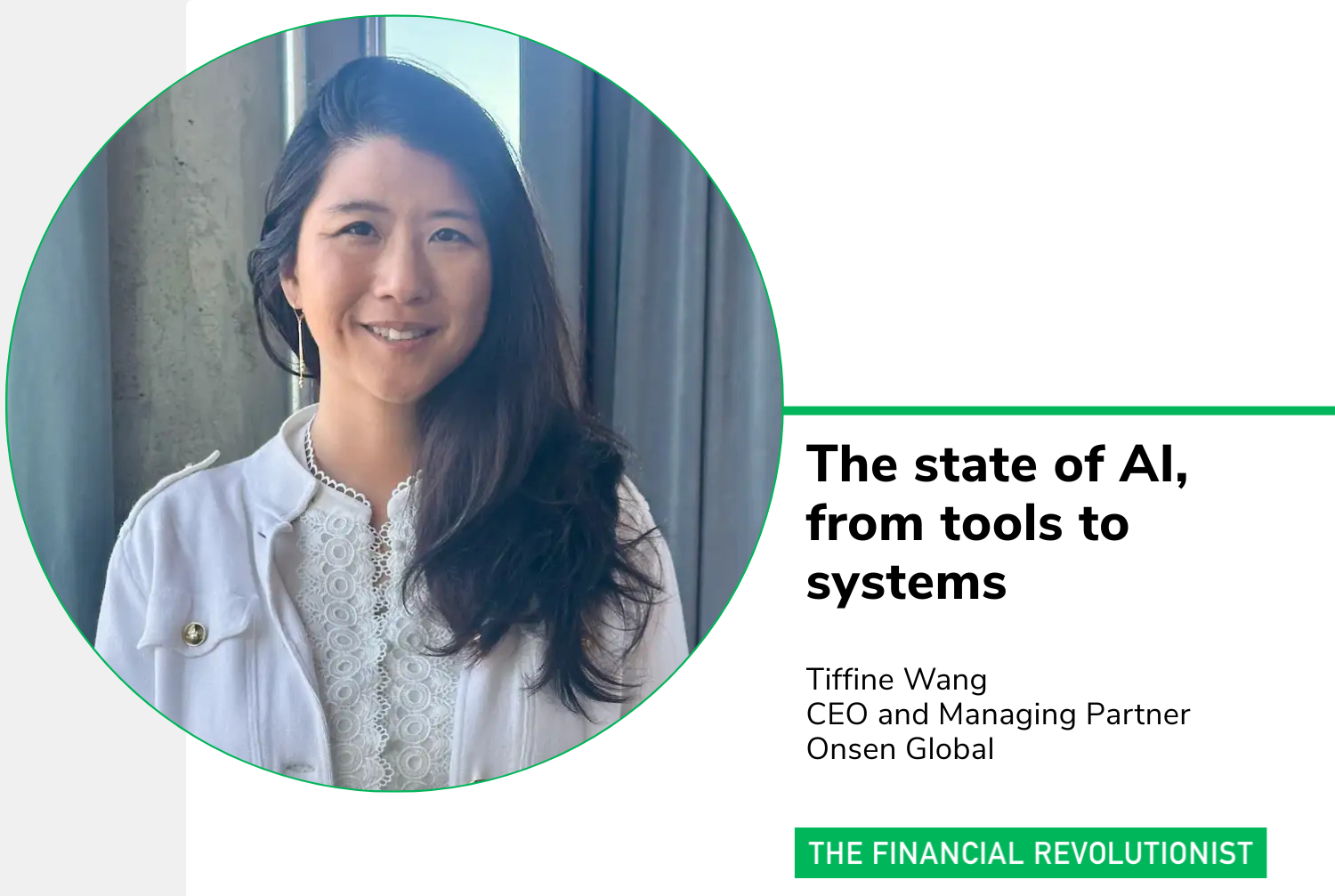
Tiffine Wang is a global venture capitalist focused on AI and tech, along with board advisory.
2025 was the year of pilots and pressure testing. We put AI into real environments and learned quickly where it failed. From messy data, unclear ownership, edge cases and real operational constraints, that reality shaped how AI evolved last year.
Foundation models improved reasoning and extended context, agents moved from demos into bounded workflows, retrieval and tool use became table stakes, and early physical AI pilots began appearing in factories, labs, and logistics. Most deployments stayed narrow and controlled by design, laying the foundation for handing more real responsibility to AI as trust is built through consistent, real-world performance.
Together, these changes marked a move from experimentation to operational dependence. AI stopped being evaluated as a tool and started being designed as a system component, expected to hold state, coordinate actions and operate under real constraints. That raised the stakes. Performance, reliability and trust moved from abstract concerns to business-critical requirements.
Agentic AI becomes coordinated systems
After years of experimentation, agentic AI is shifting from isolated assistants toward coordinated systems. Rather than single agents managing entire tasks end to end, clusters of agents now own specific functions. Rather than single agents managing entire tasks end to end, clusters of agents now own specific functions. These clusters share context, intent, and state, enabling adaptive data flows instead of rigid workflows. The real challenge now is trust.
Finance and insurance surface these risks early. Agent clusters monitor transactions, assess risk, reconcile activity and coordinate execution across payments, underwriting and claims. Small failures carry immediate financial and regulatory consequences. A misclassified transaction or incorrect risk inference directly affects balance sheets and compliance exposure. However, technology for coordinated agent systems is advancing faster than organizations are willing to trust them with autonomy.
In 2026, the key question is whether companies are willing to let these systems run without constant human oversight.
Physical AI moves beyond humanoids
Physical AI is starting to expand beyond human-like forms. Humanoids have their place but many industries don’t need them by default. In 2026, physical AI will start showing up as infrastructure. Purpose-built systems focused on specific tasks plug directly into payments, logistics, compliance and safety. As these systems connect to financial and insurance workflows, machines will act as economic endpoints. They’ll trigger payments, start claims and log compliance automatically. Physical AI will change from spectacle to utility.
The automation ceiling starts to break
Systems now handle more unclear cases and missing data without pushing work back to people. In fintech, reconciliation moves closer to full automation. In insurtech, claims and policy servicing increasingly run end to end, with people stepping in mainly for judgment. As reporting and coordination automate, middle management layers thin. In finance, insurance and pharma, this is already driving a 10% to 20% reduction in traditional middle management roles. Managers are increasingly focused on decisions and accountability rather than information flow.
Cybersecurity becomes embedded into operations
In fintech, security already matters and is taken seriously. As more of the system becomes automated, it becomes harder to manage. Decisions happen faster, with less human review, increasing the cost of mistakes. The challenge shifts to managing risk at speed and scale as systems take on more responsibility.
What we can expect to see this year
The next phase uses AI to replace entire functions. Work that once sat with teams across operations, finance, compliance, planning and coordination moves into systems that run continuously and complete tasks end to end. Humans remain accountable, but they are no longer part of day-to-day execution.
Using AI this way reshapes org charts, cost structures and ownership across industries. The key decision for leaders is which functions they are willing to let operate without people in the loop.