The AI gold rush is missing the point
/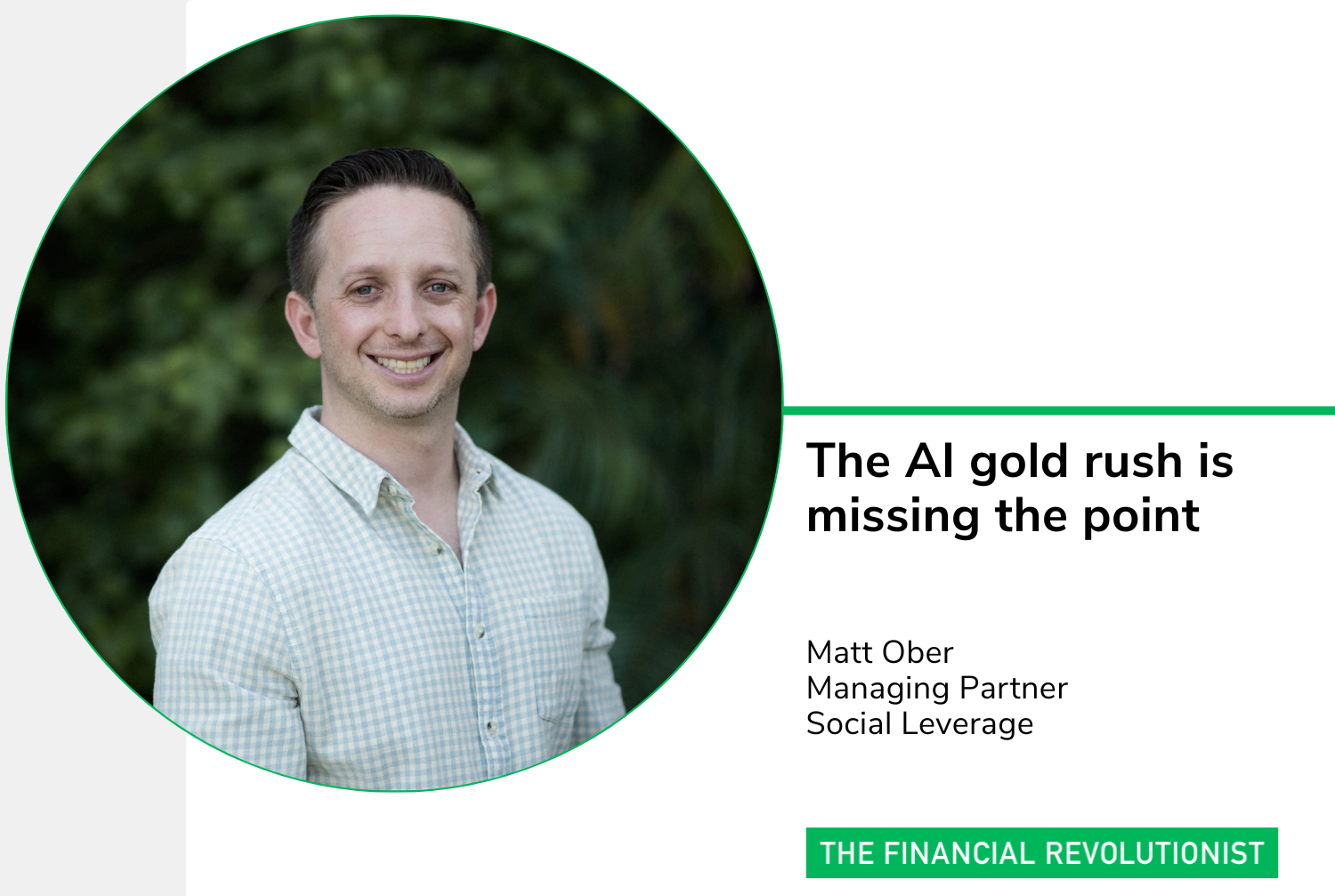
Matt Ober is a managing partner at Social Leverage. Matt was most recently the chief data scientist at Third Point, where he built the data analytics and technology platform used to enhance the firm’s investment capabilities in equity, structured credit, venture capital and cryptocurrency.
There’s a pattern emerging in early-2026 startup discourse: if you put “AI” in front of an existing industry, it suddenly feels venture-backable.
AI hedge funds. AI expert networks. AI surveys. AI everything.
But beneath the hype cycle, a more interesting theme is taking shape. The winners won’t simply be the most AI-native operators. They’ll be the ones who understand capital structure, incentives and distribution.
Technology is accelerating. Business fundamentals still decide who survives. You can see this dynamic play out across hedge funds, startups and established industries.
AI hedge funds and the VC mismatch
Y Combinator is out with its wish list. AI hedge funds make the list. The YC list of companies it is looking for is making its way around Twitter, LinkedIn, VC text message groups and Zoom meetings. I have had multiple calls, and they are all, “What do you think of AI hedge funds?”
My immediate response is, why is this a VC business? AI hedge funds sound great. WorldQuant, Citadel, Engineers Gate, Millennium, Two Sigma and dozens of other top hedge funds have teams fully using AI and have been for 10 years. There are also dozens of pods at hedge funds leaning in with AI. Is the next WorldQuant or Two Sigma, one that is AI native, going to be a VC business? I would say no. Why does a startup hedge fund need VC money? VCs need an exit in seven to 10 years, so any good hedge fund would want to stick around longer than that.
Also let’s be really honest, AI and using AI for alpha, compliance, research and everything in between is only one part of the game. Marketing/fundraising, recruiting and risk management are more important in my opinion. There are thousands of PMs and teams showing great Sharpe ratio strategies using AI that never raise enough AUM. Why? They don’t have all the pieces to make people want to get involved. Also, to run a hedge fund these days, anything less than $250 million, maybe even $500 million, is hard.
All that said, there will be a one-man hedge fund, leveraging AI, that manages more than $1 billion. But I do not think it will be VC backed. If there is a prediction market on whether there will be a VC-funded AI hedge fund with more than $1 billion in AUM before 2028, I would bet no.
Sales, revenue and distribution
In a world of AI and vibe coding, getting an MVP off the ground is becoming easier. There are also endless sales enablement, go-to-market and AI-based tools that can make a founder’s life easier and, at the same time, overwhelming.
Outside of deep tech, most founders who are succeeding are those who have a clear go-to-market plan, know how to sell, understand their audience or have figured out distribution early.
Rewind five years, or even two to three years ago, before AI and all these tools flooded the market, and you really needed a strong technical founder to get a company off the ground. Don’t get me wrong, having a strong technical co-founder is still very helpful and, in many cases, important for success. But more and more, we are seeing strong companies led by business-minded sales executives take off quickly.
There is a lot of noise in the startup community. Companies going from $0 to $100 million in one year is not the norm. At the same time, getting real revenue in your first year is also not unheard of.
The puck has also moved for Series A fundraises. A few years ago, cross $1 million in revenue and, boom, there were plenty of term sheets. Now, for a Series A fundraise, firms are looking for $2.5 million or more in revenue, along with a list of other metrics.
Long story short: Sales solves everything. Distribution plus revenue equals the key to success. You don’t have to have the perfect product or the best product to win. You can have technical debt. You don’t have to wait to start selling.
The same fundamentals are reshaping established industries, not just startups.
The infrastructure play in expert networks
Tegus, which was acquired by AlphaSense, was a real disruptor in expert networks. They drove down the costs of what experts were paid, but also were a first mover on building a transcript library and SaaS model. The value of their transcripts was immense and was a real change for the industry.
AI infrastructure providers can streamline this type of operation. For incumbent expert networks, they may reduce costs, allowing firms to plug and play and change not only how they source experts but also how they conduct calls, with the potential for faster integration.
For new expert networks, the opportunity is significant with AI-driven sourcing and voice infrastructure, as they let you build essentially an expert network in a box. If you have relationships and can close a deal, you can now build out sourcing, interviewing via voice AI, and transcripts.
Fixing surveys with AI
SaaS has been in the headlines for all the wrong reasons. But I am curious about the survey business.
Surveys as a service, or the survey industry in general, feels ripe for real AI disruption. If you have ever taken a survey from GLG, Coleman Research or the dozen other expert networks serving up surveys, you have felt the pain.
They get you with an email or text that says $50 for 10 minutes of your time. The topics rotate, covering everything from trends in wealth management to competition in financial data, and payouts vary. The catch is you have no idea if you qualify. What’s worse, even if you click to accept within minutes of receiving it, the survey may already be closed. But you do not find out whether the survey is closed or whether you qualify until you spend more than 10 minutes on pre-screening questions.
What is even more painful is the bugs in the software, the UI/UX feeling like the early 1990s, and then half the time they have mistakes. Obviously some weird logic that shouldn’t be visible to the end consumer.
This is clearly a place where disruption, user experience and quality can improve. It is also a data problem. I should not be getting surveys I do not qualify for. The software, if AI were baked into the tech stack, should learn from my answers and better target the surveys that actually fit.
In an ideal world, companies would also offer a voice option. Why do I have to click for minutes on end? I know there are many companies looking to disrupt or change the business models of expert networks. I hope these expert networks also start to embed new survey technology. Maybe they are not incentivized to change their ways, but they could save significant amounts of money and make the expert or survey taker experience far better, which would lead to greater efficiency for everyone.
Execution still wins
Across hedge funds, expert networks and startups, the pattern is the same. AI can speed up research, compress product cycles and lower the cost of launching something new. It can make a one-person team look like 10. It can turn what used to take months into days. What it cannot do is manufacture trust. It cannot raise capital for you. It cannot build distribution from scratch. It cannot fix a broken incentive structure or overcome weak economics.
We are entering a phase where building is cheap and shipping is easy. That does not mean winning is easy. In fact, the bar is moving higher. When everyone has access to the same models, the same tooling and the same infrastructure, differentiation shifts back to fundamentals: who controls distribution, who understands capital structure, who can price risk correctly, who can recruit and retain talent, who can compound revenue over time.