How AI is raising the stakes on data access for fintech startups
/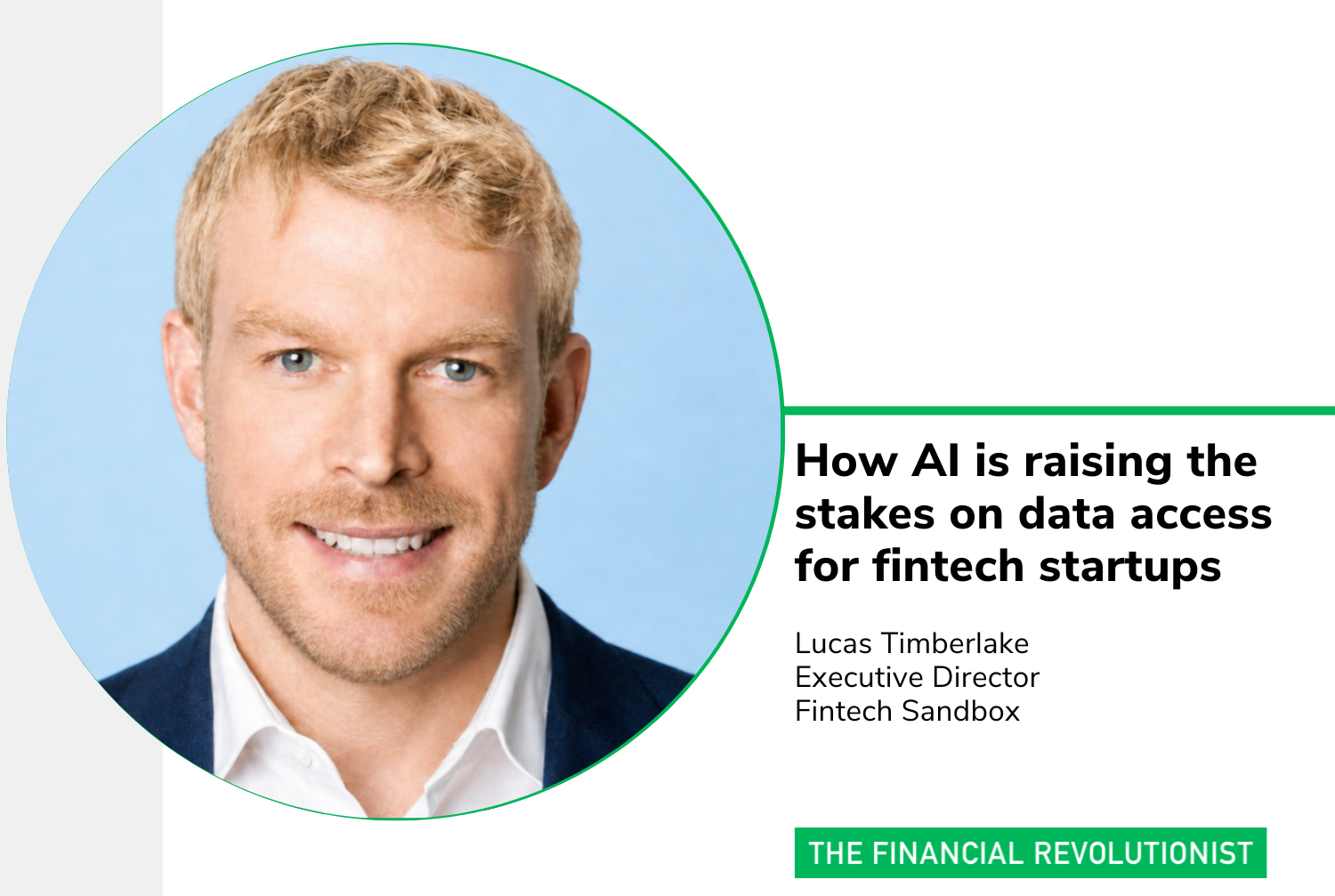
Fintech Sandbox has provided free data access to more than 450 early-stage startups over the past decade. The FR spoke with executive director Lucas Timberlake, who joined the nonprofit in March, about how AI has changed what founders need from data.
You come to Fintech Sandbox from an early-stage venture capital background. How important is data access to investors evaluating early-stage startups?
Data access can be a real de-risking factor for investors. If a startup has already built its product before paying for the datasets it needs, and can keep iterating with minimal or no data cost, that signals efficiency, traction, and a clearer path to growth. It also suggests the team has solved an important operational hurdle early — which can make the company a lot more investable. That's really why we engage with early-stage startups. Connecting them with free access to data can be just the thing they need to get their solutions to the next level.
What role does data play in the fintech startup landscape, and how has AI changed what founders actually need from it?
The rise of AI has had a two-fold impact. First, it’s letting startups build more with fewer resource constraints in certain areas, whether that’s reducing the need for large sales teams or lowering software development costs. The barrier to entry for building something has been significantly reduced.
Second, founders building with AI have never had a greater need to access high quality data sets in an efficient manner to train their “dragons.” While the standard for outputs from AI models has risen significantly across the board, AI startups operating within highly regulated industries like financial services can’t afford to have models that are hallucinating and generating outputs that are anything less than 100% accurate. Early fintech companies need reliable, well-governed data with clear provenance as well.
Some organizations offer startups free or subsidized access to datasets, and Fintech Sandbox specifically has done so for more than 10 years. What makes a program like this sustainable to the point that it can endure multiple fintech innovation cycles and remain relevant?
For Fintech Sandbox specifically, much of the foundation was laid by our team and the organization’s co-founders who are serial financial services executives and entrepreneurs. We’ve learned that the ability to adapt is the key to sustainability. Understanding the landscape and what’s to come ensures that the data you have and partners you work with are always relevant.
For us, I think it’s fair to say we have a sustainable model. But we’re always thinking about how to stay relevant in the future. Our ability to stay relevant has always come from being introspective and recognizing changes before they happen, and adapting our model for tomorrow’s landscape.
For example, we’re working with our data partners to develop a framework that better serves the needs of early-stage AI startups. One example is our recent Demo Day event, which highlighted six AI-driven innovations built by Data Access Residency participants.
Can you point to any concrete examples where early data access made a visible difference, whether in how a product was built or how a company scaled?
We’ve seen this firsthand where free data access has saved the startups hundreds of thousands of dollars, not to mention the time spent finding, negotiating and managing data contracts with large organizations.
While we equally appreciate all the 450+ startups we've worked with, one that really stands out is a recent Demo Day presenter, DigsFact — an agentic AI fraud detection engine that uses human-like reasoning at scale (under one millisecond per transaction) to prevent major financial crimes like fraud and money laundering.
By taking advantage of free data access through a longstanding partnership Fintech Sandbox has with Equifax, DigsFact has been able to expand its product capabilities to monitor 25 million transactions per day and has reduced the cost of manual transaction reviews by approximately 70%.
In order to deliver on the promise of access, Fintech Sandbox and other similar programs require someone on the other side, such as at large financial services data partners, to open up their data. What do the providers get out of it — and is that calculus something investors or acquirers are starting to pay attention to?
That question is definitely part of the calculus for data providers, as they are for-profit businesses at the end of the day. There are several immediate benefits that we have seen in the partnerships we have with our data providers.
First, the startups our data providers work with have already been vetted by our team and community partners for viability, which significantly reduces the due diligence resources required on their end. We even have a team member who is an industry veteran from one of our largest partners and supports our data partners in connecting with the right startups.
In addition, data providers can be confident their data is being used responsibly. These relationships can create opportunities to discover future business partners, strategic investments, or even acquisition targets.
There's also a less obvious upside for data providers: startups often use their data in ways the organization never anticipated — but within a clearly defined framework through enterprise data access contracts. Because the founders we work with are at the cutting edge of early-stage innovation, our data partners often uncover new use cases that can inspire innovation inside their own business units.