6 questions with Simon Taylor, founder of Fintech NerdCon
/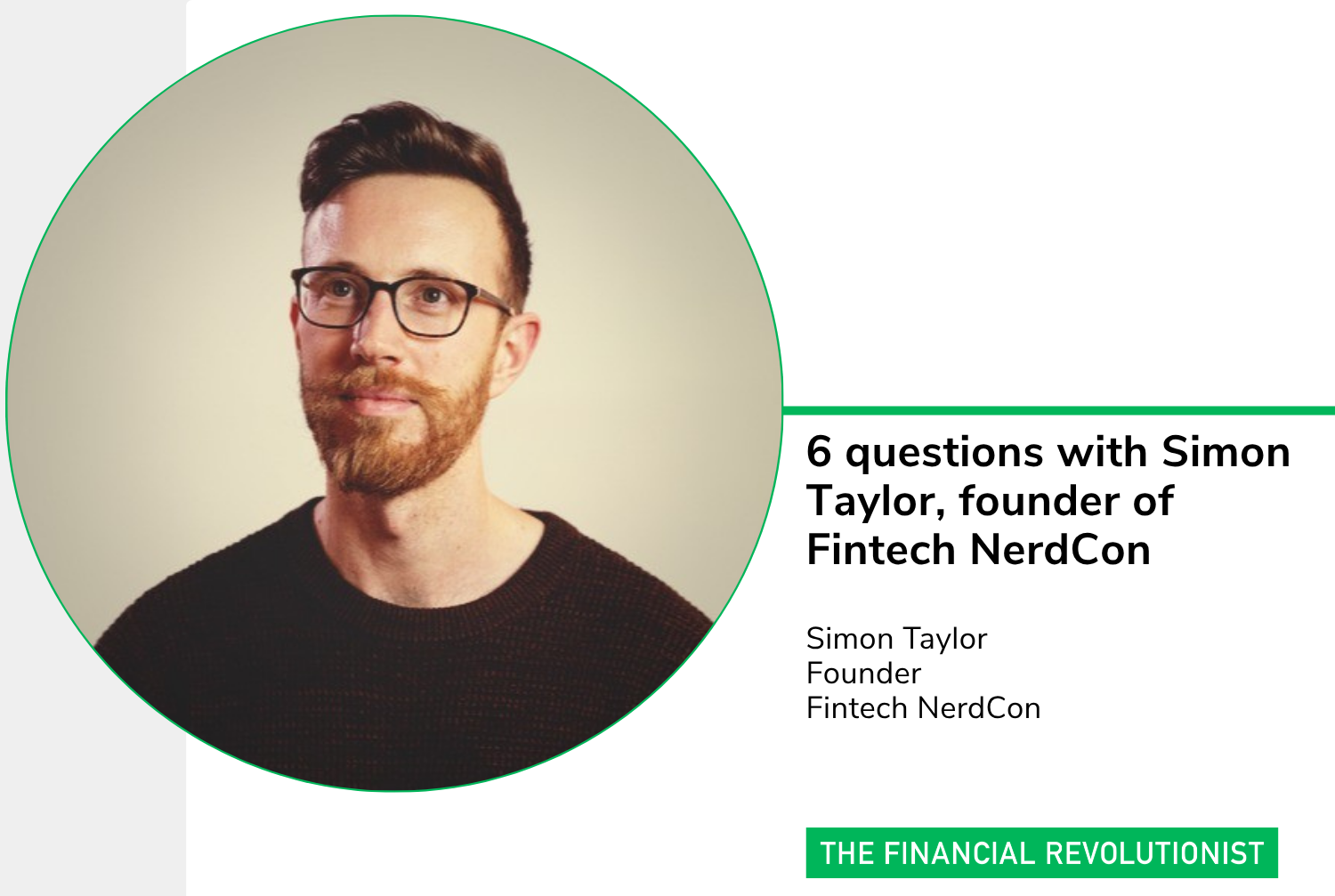
Simon Taylor is founder of Fintech NerdCon, the second annual conference for fintech operators, taking place Nov. 18-20 in San Diego. A longtime fintech analyst and operator, Taylor is the founder of the Fintech Brainfood newsletter. He also leads market development at Tempo, advises Sardine and previously co-founded consultancy 11:FS.
The FR sat down with him to discuss what comes next for the industry and his vision for this year’s NerdCon.
If you were starting a fintech today, what problem would you build around, and why?
There are great businesses, and then there's impact. For pure profit potential, products that help finance and support the growth of the AI built out are much needed.
Specialist lending, marketplaces, procurement, and cost management are all going to be critical for any company impacted by AI – which is all companies. But for impact, I'm much more interested in how we can start to finally do something with consumer financial health. One of the top consumer use cases for ChatGPT is financial information (after health). The gap between that and a finance agent that automatically helps my idle cash do more, and switches my bills, and is my personal CFO is pretty large. Nobody has stuck the landing on this, and it's tricky to make work in the mobile form factor or for users to trust it. But it would be huge.
Everyone is talking about AI agents. What's the biggest misconception about where agentic finance is actually headed?
The biggest misconception is that agentic payments are already happening. They aren’t.
But the funnel of commerce has shifted dramatically. Shopify says traffic coming from ChatGPT converts between four and six times better than from search. That's because usually, the research has already happened; people arrive with much more intention to buy.
But that buying is still on the home page. The New Consumer found that just 9% of people surveyed in America were happy to let AI buy things. Yet the standards are coming, from Visa, Mastercard, Coinbase, Stripe, even Cloudflare.
A big topic for us this year at Fintech Nerdcon is where the rubber hits the road on this stuff. And where volume is coming from.
The lines between banks, fintechs, infrastructure providers, and AI companies are disappearing. What does the next generation of financial services ecosystems look like?
I think the term "fintech" might not describe what comes next. Fintech was mobile and cloud, with companies that had much lower cost structures and were digital-only. The AI era is another order-of-magnitude reduction in costs — but also companies that can ship far more product in the same amount of time. Block's Q2 earnings noted they shipped 3x more features YoY after cutting 40% of its workforce in the same year. AI-first fintech businesses will go much wider and deeper.
Stablecoins have moved from niche infrastructure to boardroom discussion. What's the biggest opportunity people are underestimating, and what risks are they still overlooking?
The biggest opportunity being overlooked is the revenue in this for banks. Customers want 24/7 money movement, and stablecoins deliver that. And it doesn't have to mean deposit flight, it could mean new fee revenue. But my fear as always with new payments types is fraud and money laundering. Some companies are working hard to get this stuff right from day 1. But as we saw in Fintech with Synapse, it takes just one big blow-up for the whole industry to change.
I expect this tension to be key for us on our Stableverse and Vault stages this year as banks and fintech companies look at how they can do more. A non-bank can begin to make yield from their float; a remittance company can monetize the receiver, not just the sender. There's a ton of opportunity, and a ton of risk, and not many folks who've lived it. We gathered everyone who has.
What's one trend you believe will define the next five years that isn't getting enough attention today?
The remaking of capital markets. Fintech has been consumer and B2B. How we distribute products, the UI and some of the infrastructure that makes that possible digitally. But the way loans are packaged, sold and resold looks the same today as it did in the 1990s, and the same is true for stocks. And complex products like swaps and options, that the largest companies in the world use, just haven't been made broadly available.
AI is already quietly reshaping the role of analyst and the admin side of capital markets desks, but I'm excited for what could come next. I've invited Marc Ruby from Net Interest (one of my favorite writers, and a deep capital markets expert) to host a morning with folks like Hebbia and Rogo so we can give this some exposure at Fintech NerdCon this year. It's not something most people have ever thought about, but tokenization, AI, and prediction markets will reshape Wall St, and therefore the products you use every day.
As co-founder of Fintech NerdCon, you have a front-row seat to the conversations shaping the industry. What themes are emerging among operators, and what do you think attendees will take away from this year's event?
One: Getting charters and how that reshapes the landscape. It used to be that having a bank charter was a moat, but that’s changing.
Two: Practical usage of AI. Everyone is doing this to various levels of skill, and is endlessly curious about how everyone else is doing.
Three: Tokenized deposits, stablecoins and the future of money.
Four: The ever-present risk, compliance, and fraud ecosystem.
And, of course, five: Prediction markets.
We're architecting the show around these topics. We hear them every day, I see people reply to the newsletter about them, I can see the open rates. The show is built around conversations that go deeper, assume the audience can keep up, avoids platitudes and gives you something you can use when you get back to the desk.
If these are the conversations you want to be part of, join us at Fintech NerdCon in San Diego this November!