2026 outlook: How Americans are moving their savings
/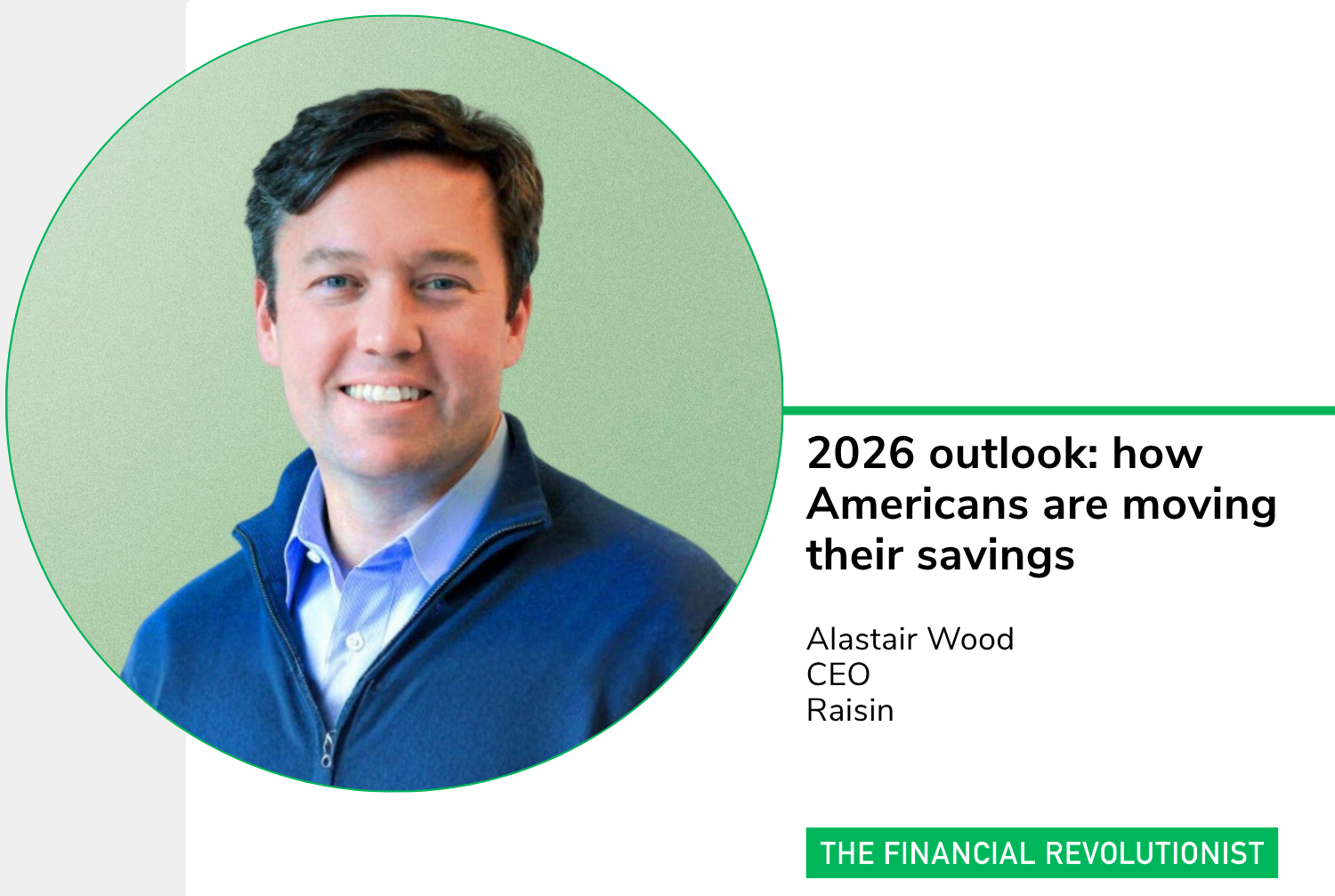
Alastair Wood is CEO of Raisin, a platform that connects consumers with banks offering savings products like high-yield accounts and CDs.
After years of rate volatility, rapid fintech adoption, and greater access to higher-yield products, consumers are starting to look beyond their primary bank. Rates alone no longer close the deal. What replaces it is a more demanding set of expectations that include digital experiences, transparent pricing, and frictionless account management.
The result is a deposit landscape defined by consumer agency, with a growing role for platforms that make discovery and switching easy. These shifts are starting to redirect deposit flows toward institutions that reduce friction and surface value clearly.
Deposit competition is no longer about marginal rate advantages. Consumers will move money when the experience is easier and the value is clearer, forcing banks to compete on usability, transparency, and speed, not just yield.
Deposits are likely to land in higher-yield vehicles
A JPMorgan Chase Institute report suggests that while traditional checking and savings balances have remained flat, total cash reserves have increased since mid-2024, even after accounting for higher investment activity. Households may be keeping more cash in higher-yield vehicles rather than in low-interest accounts.
This shift aligns with broader industry data that the number of consumers earning 4% APY on high-yield savings accounts reportedly tripled between 2023 and 2024. Even if rates stabilize in 2026, recent experience with volatile rates may increase the likelihood that cash remains parked in high-yield-bearing vehicles for maximized savings benefits.
At the same time, switching friction is a major challenge. Raisin’s consumer banking trends survey data shows that 32–35% of respondents across all income groups are concerned about switching friction. However, consumers who overcome this friction tend to make more intentional decisions, weighing rates alongside digital experience, transparency, and ease of use.
The institutions that reduce this friction through simpler onboarding, clearer fee disclosures, and faster account access will capture a large share of the deposits already in motion. Those that don't will continue to hold balances at the pleasure of inertia
Digital savings standards are resetting expectations
Digital-first experiences that prioritize usability and transparency are increasingly driving deposit mobility. The national average savings account yield is 0.6% APY at traditional institutions, while consumers can often find higher rates of 4% APY or more through digital banks.
Since almost 30% of Gen Z, Millennials,and Gen X already earn more than 3% APY, they are more likely to view a “competitive” rate through the lens of digital experience, service quality and bank transparency.
Raisin’s data explores how different segments value these factors. Service quality is most critical to Boomers (up to 67.6%), digital convenience is a stronger driver for Gen Z (44.1%), and transparency around rates and fees grows in importance as income rises. A one-size-fits-all product strategy will no longer be enough to retain depositors. Banks that invest in segmented experiences, meeting older depositors with service quality and younger ones with digital-first experiences, will ultimately win out.
The evolution of rate discovery
Many consumers across generations (25-38%) do not know their current APY, leaving them with little insight into their actual earnings. One contributing factor may be that Americans perceive rate comparisons as a hassle, with a majority saying they wish there were an easier way to shop for better savings rates.
Deposit marketplaces make it easier for consumers to discover and evaluate savings options, especially for those who have a greater incentive to optimize yield. As openness to new banking models approaches 70% among consumers with balances of $100,000 or more, the transparency of these platforms is likely to play an increasingly important role in financial decision-making, according to the report’s findings.
Banks and platforms that make rate discovery simple and transparent are well-positioned to capture high-balance depositors who are ready to move — but have not yet found an easy enough path to do so.
The rise of a portfolio mindset
Given these conditions, more consumers are likely to manage their savings across multiple digital accounts rather than relying solely on one primary bank.
A portfolio approach to cash management is expected to continue gaining traction. Consumers may allocate funds based on purpose. Some funds may remain accessible in high-interest savings accounts, while others, particularly those earmarked for short-term goals, may be placed into CDs for added predictability. This portfolio mindset toward cash reflects a gradual shift in the direction of more intentional, goal-based saving, even as many consumers continue to maintain a primary banking relationship.
The path forward
The rules for winning deposits are changing, and not all banks are keeping up. The institutions that will win deposits in 2026 are those that deliver both rates and experience. Consumers are no longer defaulting to big-brand banks as they become more rate-aware in the digital age; they are increasingly seeking competitive rates from a broader range of institutions that meet their expectations for a frictionless experience.
This sets a higher bar for how banks attract and retain new customers, putting immediate pressure on the first impression they deliver.
FIs need to audit their digital experience as a new customer would. If opening an account takes more than a few minutes, or if your rates are not displayed clearly, you are already losing consumers who have alternatives. Fix the onboarding funnel before investing in acquisition.
FIs also need to segment their rate and product communication by customer profile. Boomers need reassurance around service, while younger depositors need speed and digital experiences. A single message will not move both groups.
Partnering with fintech platforms may offer a practical way to meet consumer needs and gain new customers without the high costs of large-scale technology builds or national marketing campaigns.